
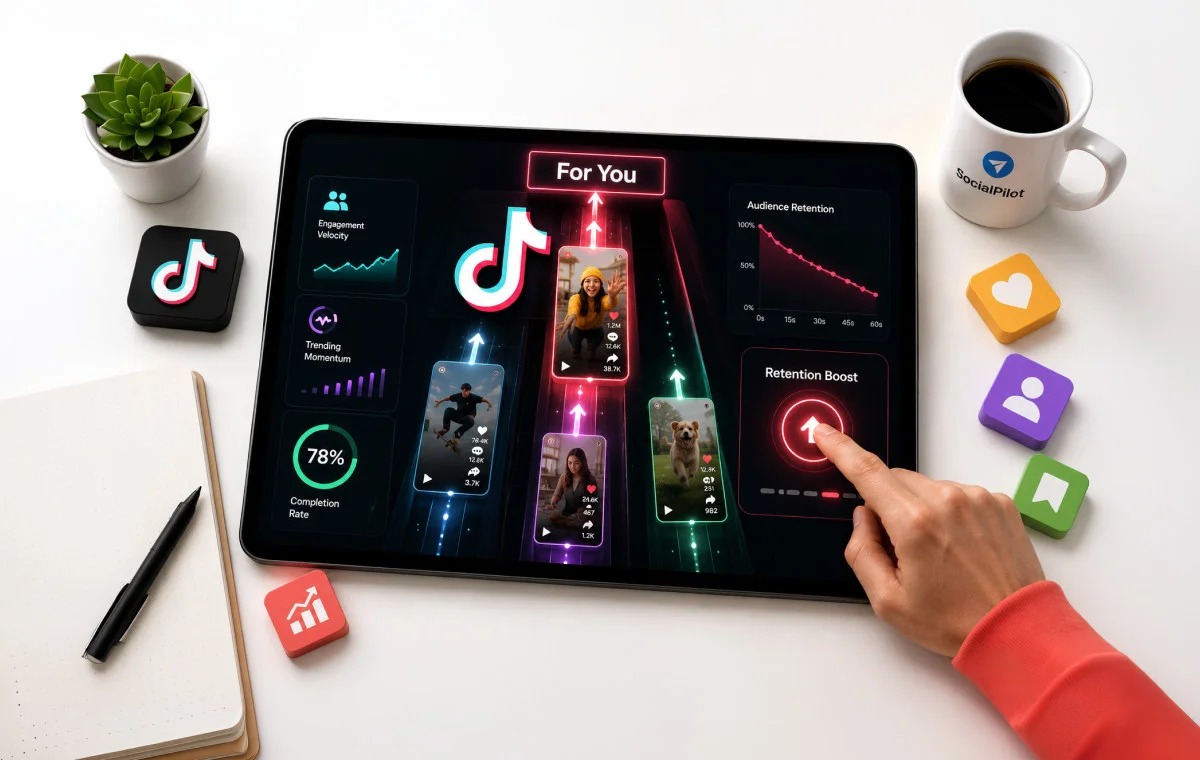
TikTok disrupted the conventional structure of social media platforms with its “For You” page. It curates posts so precisely relevant that keep users engaged for longer periods.
For brands and creators, this is the holy grail for gaining visibility among the right audience and achieving viral success. But how can your TikTok get a place on that table?
Well, the secret lies in the TikTok algorithm. Multiple signals are weighed by the TikTok algorithm to decide whether you make the cut.
If you’re struggling with low views, volatile growth, or are just starting out and want to make an impact, this blog is for you.
We’ll dive into how the TikTok algorithm works across TikTok and share tips and tricks to harness it to boost your organic reach.
Let’s begin with the basics.
What is the TikTok Algorithm?
The TikTok algorithm is the platform’s underlying recommendation system that decides which videos appear on each user’s For You Page (FYP) and across TikTok. It uses AI systems to analyze some specific signals to predict whether the user will like, interact with, share, or skip the video.
So, if you ever wonder how TikTok reads your mind, it is because TikTok has a machine-learning algorithm that constantly analyzes your behavior and predicts hyper-personalized content that you will find most interesting and engaging.
Like every other social media algorithm, the mechanism keeps changing over time. When a user engages with something new, the algorithm catches it, feeds it into the formula, and shows them a video of that type.
TikTok newsroom also stated, “The system recommends content by ranking videos based on a combination of factors – starting from interests you express as a new user and adjusting for things you indicate you’re not interested in, too – to form your personalized For You feed.”
Latest TikTok Algorithm Updates (September 2026)
TikTok’s recommendation system keeps evolving, changing what gets prioritized on the For You Page and how creators earn reach.
Here are the biggest TikTok algorithm updates shaping visibility and engagement:
September 2026: No Significant Algorithm Updates
TikTok and its executives announced no confirmed ranking or distribution changes in August and September 2026. The core signals are unchanged: completion rate and watch time first, then saves and shares, then likes. The US For You feed keeps running on the Oracle-retrained, US-only model from April, with no new mechanic change this month
July 2026: EU Regulators Move to Limit For You Recommendations of Minors’ Content
On July 24, 2026, the European Commission issued preliminary findings that TikTok breaches the Digital Services Act on minors’ account safety. The Commission’s preliminary view is that TikTok should default minors’ accounts to contacts-only and stop recommending content from minors’ accounts, including 16–17-year-olds, in the For You feed.
This is a preliminary regulatory finding for the EU only, not a change TikTok has made yet; TikTok can still respond before any decision. TikTok itself confirmed no new ranking or distribution change this month, and the Oracle-retrained US model kept settling after April’s transition rather than changing again.
What this means for you: If you are an adult creator, nothing changes today. If the finding is confirmed, For You reach in the EU for content posted by minor-run accounts could be restricted. This is a preliminary EU finding, not an implemented algorithm change.
Source: Commission preliminary finds TikTok in breach of the Digital Services Act – European Commission
April 2026: US Recommendation Algorithm Transitions to the Oracle-Retrained, US-Only Model
TikTok’s US For You feed moved onto a recommendation algorithm that Oracle licensed from ByteDance and retrained from the ground up using US user data only. The full transition to this US-controlled model landed in Q2 2026, following the January 22, 2026 transfer of US operations to the Oracle-led joint venture. Because the model now learns from US behavior alone rather than global signals, US distribution is decoupled from the worldwide feed, and creators reported reach swings, more repeat videos, and shifting distribution while it recalibrated.
What this means for you: If you create for a US audience, expect reach and engagement to move around while the retrained model settles, and re-baseline your analytics during this period. Content that performs in the US may no longer travel the same way globally, so judge each video against recent US performance, not last year’s numbers.
Source: TikTok Users Face Uncertainty as Platform Shifts Algorithm – Spectrum News
February 2026: TikTok Launches Local Feed for Location-Based Content Discovery
TikTok launched the Local Feed in February 2026, a dedicated tab on the home screen that surfaces content based on the viewer’s location, the topic of the post, and recency. Posts from local businesses, restaurants, event organizers, and local creators reach nearby users without requiring a follow relationship. The feature rolled out in Europe (UK, France, Italy, Germany) in December 2025 before launching across the US in February 2026. Content visibility in this feed is determined by three inputs: user location, content topic, and how recently the post was published.
Location is now an active ranking signal for a dedicated discovery surface, separate from the main For You feed. Geo-relevant content that previously relied entirely on hashtags and interest matching has a direct distribution channel. Creators do not need to do anything different to appear in the Local Feed; standard location tags and topic-clear content are enough.
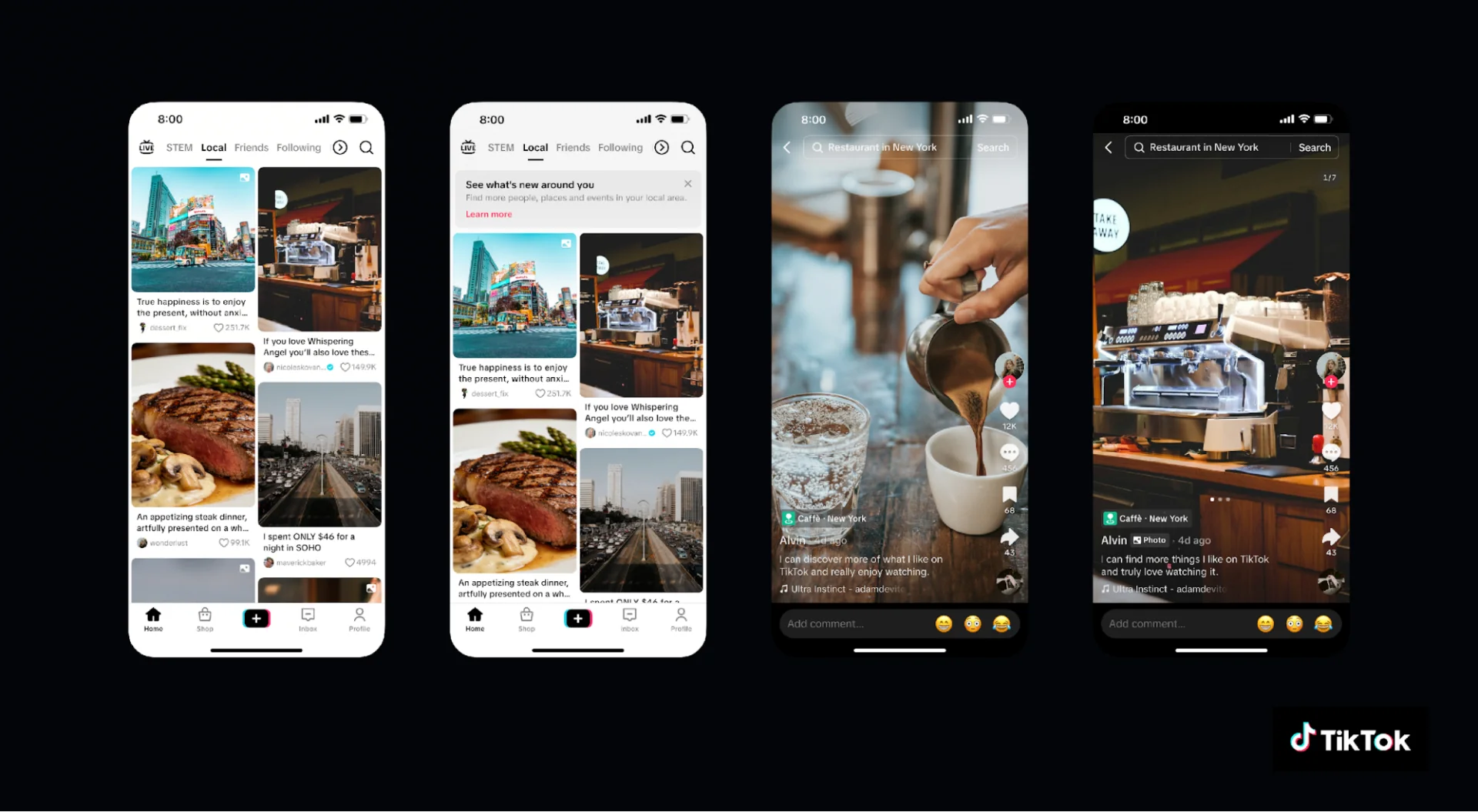
What this means for you: If your content is tied to a specific place, local services, restaurants, retail, travel destinations, community events, the Local Feed is a low-friction discovery channel. Add a location tag to relevant posts and keep your content topic-clear. For non-location-specific creators, the Local Feed does not affect For You distribution.
Source: Introducing the Local Feed — TikTok Newsroom
Late 2025: Follower-First Initial Distribution Replaces Random Seed Audience
TikTok shifted the initial distribution phase in late 2025. New videos are no longer tested against a random pool of interest-matched users. Instead, the algorithm first shows the video to a subset of the creator’s own followers, then evaluates how that group responds before deciding whether to push the video to unconnected audiences. Completion rate, saves, and shares from existing followers now act as the gate for the expansion phase.
This changes who controls your initial reach. A large but disengaged follower base will suppress distribution just as effectively as a weak video. A smaller, highly engaged audience can now carry a video further than a random sample of strangers ever could.
What this means for you: The engagement rate of your follower base now matters for every upload, not just for vanity metrics. Treat your followers as a test audience, create content that rewards them first, and broader distribution will follow. Based on community testing, not officially confirmed by TikTok.
Source: TikTok’s Algorithm in 2026 by Micky Weis
July 2025: Creator Protection Tools and Content Check Lite Raise the Quality Bar
On July 30, 2025, TikTok introduced Content Check Lite, a pre-posting review tool in TikTok Studio that lets creators see whether their video is likely to be eligible for the For You feed before publishing. Content flagged for potential guideline violations or low-quality signals can be revised before it goes live. TikTok reported a 27% reduction in low-quality uploads among Shop sellers who used the tool in early rollout.
The same release added Creator Care Mode, which uses AI to filter offensive and inappropriate comments in real time, and improvements to keyword filtering during LIVE streams. Collectively, these tools are designed to raise the quality baseline on the platform, which over time affects the signal pool the algorithm uses to determine what content deserves wider distribution.
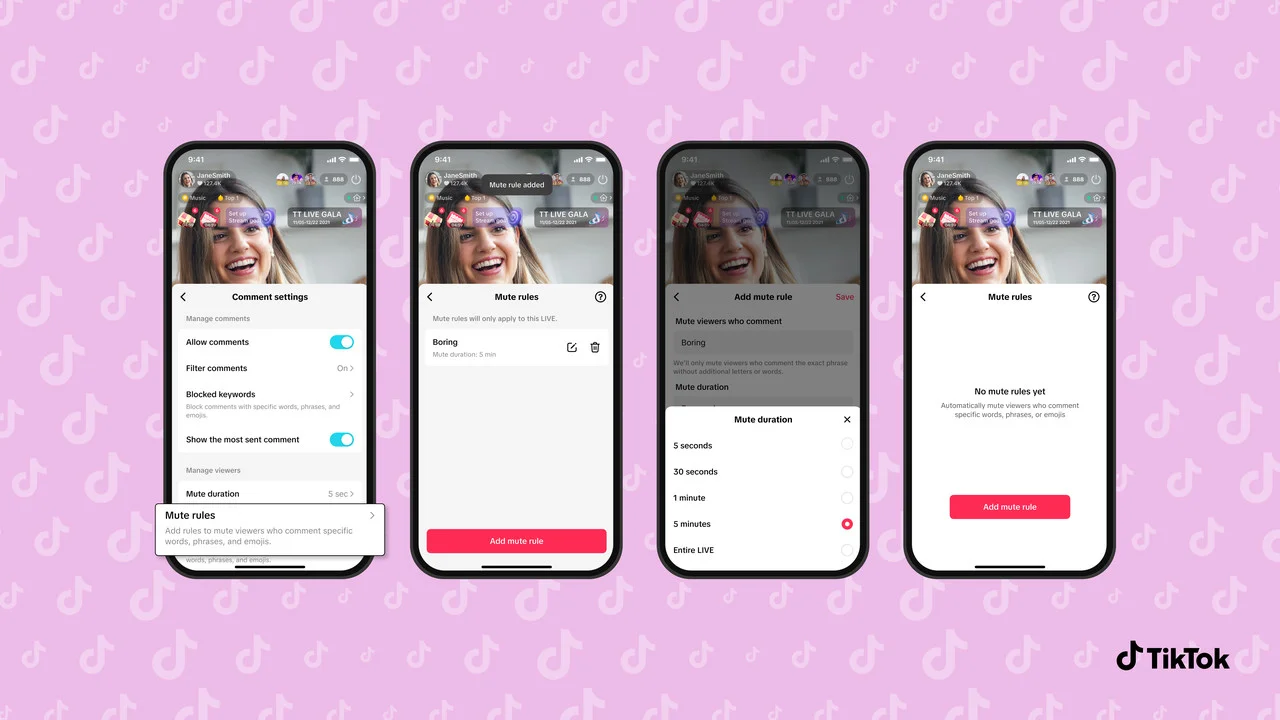
What this means for you: Run Content Check Lite on every video before posting. If it flags your content, fix it, you will not know a video has been suppressed after the fact. The 27% drop in low-quality uploads among early adopters shows the tool is accurate enough to act on. Find it inside TikTok Studio before you hit publish.
Source: New Tools to Protect Creators: TikTok Newsroom
On June 3, 2025, TikTok upgraded its keyword filtering system with AI. The new Smart Keyword Filters go beyond exact matches, when a user blocks a term, the system automatically also filters related words and synonyms. Blocking “remodeling” catches “renovation” and “renovations.” Users can see which additional terms are being filtered. TikTok also announced plans to raise the keyword cap from 100 to 200, with bulk-add functionality. Before this update, keyword filters had already been used to filter over 200 million words from feeds globally.
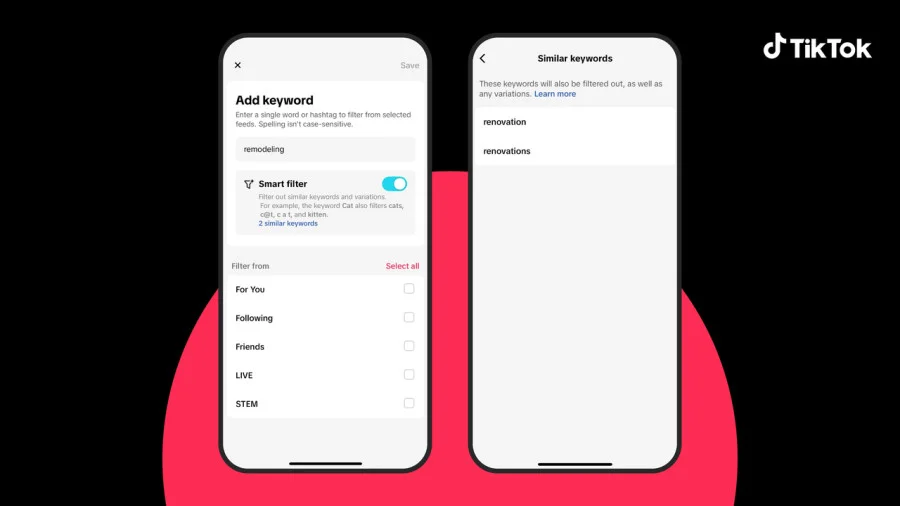
What this means for you: If a user has blocked a topic that overlaps with your niche, your content is now more likely to be caught, not just videos using the exact blocked word, but any semantically similar phrasing. Precise, distinctive language in captions is harder to catch in a broad filter sweep. Vague or generic phrasing around contested topics carries more suppression risk under the upgraded system.
Source: TechCrunch
June 2025: Manage Topics Lets Users Tune How Often Each Subject Appears in FYP
Also on June 3, 2025, TikTok launched Manage Topics, a control panel inside Content Preferences that lets users adjust how often content from over 10 topic categories appears in their For You feed. Categories include Creative Arts, Travel, Nature, Sports, Beauty, and Humor. Adjusting a topic changes how frequently related content appears, not whether it appears at all. The feature launched globally after a US pilot, and TikTok added a direct shortcut to topic controls from any video’s share menu via “Adjust your For You.”
What this means for you: The algorithm now has an explicit preference signal alongside its behavioral inference. Users who have boosted your topic category are actively telling TikTok to show them more of what you do. Creators with a clear, single-topic identity benefit most, the algorithm now has a clean match to make. Multi-niche accounts are harder to route to interested users under this system. The most practical change: stay consistent with your niche, because some users are now literally opting into your category.
Source: Discover New Content and Creators – TikTok Newsroom
How Does TikTok Algorithm Work in 2026?
TikTok’s algorithm recommends content on “For You” based on thousands of signals to determine what will be relevant to the user. It prioritizes a few signals (which we will discuss later) over others and ranks a video accordingly.

To track those signals, the algorithm takes every video through a series of phases:
- Content Auditing: After the video gets uploaded, the TikTok algorithm uses AI vision engines to check for copyright violations or duplicate content. The algorithm also uses NLP to analyze the video’s metadata to understand its content and to share it with the right audience.
- Initial Serving: After the initial check, the TikTok algorithm shows the video to a subset of your existing followers. The algorithm measures how that follower cohort responds, completion rate, saves, and shares, before deciding whether to push the video to a broader, unconnected audience.
- Interest Signals Check: This is where the recommendation system checks user interaction signals, such as completion ratio, likes, saves, etc.
- Expansion phase: If the engagement crosses a certain threshold, the TikTok algorithm serves it to more people, and the process continues until the engagement dies out.
TikTok’s approach of testing videos with a small group and then expanding to a larger, relevant audience has shifted it from a focus on virality to community-building. Of course, there are systems within the TikTok algorithm that occasionally disrupt patterns to show the audience something new.
So this was the science, let’s head to the main TikTok algorithm signals – something you can control to get the visibility.
Ranking Signals TikTok Algorithm Checks Majorly
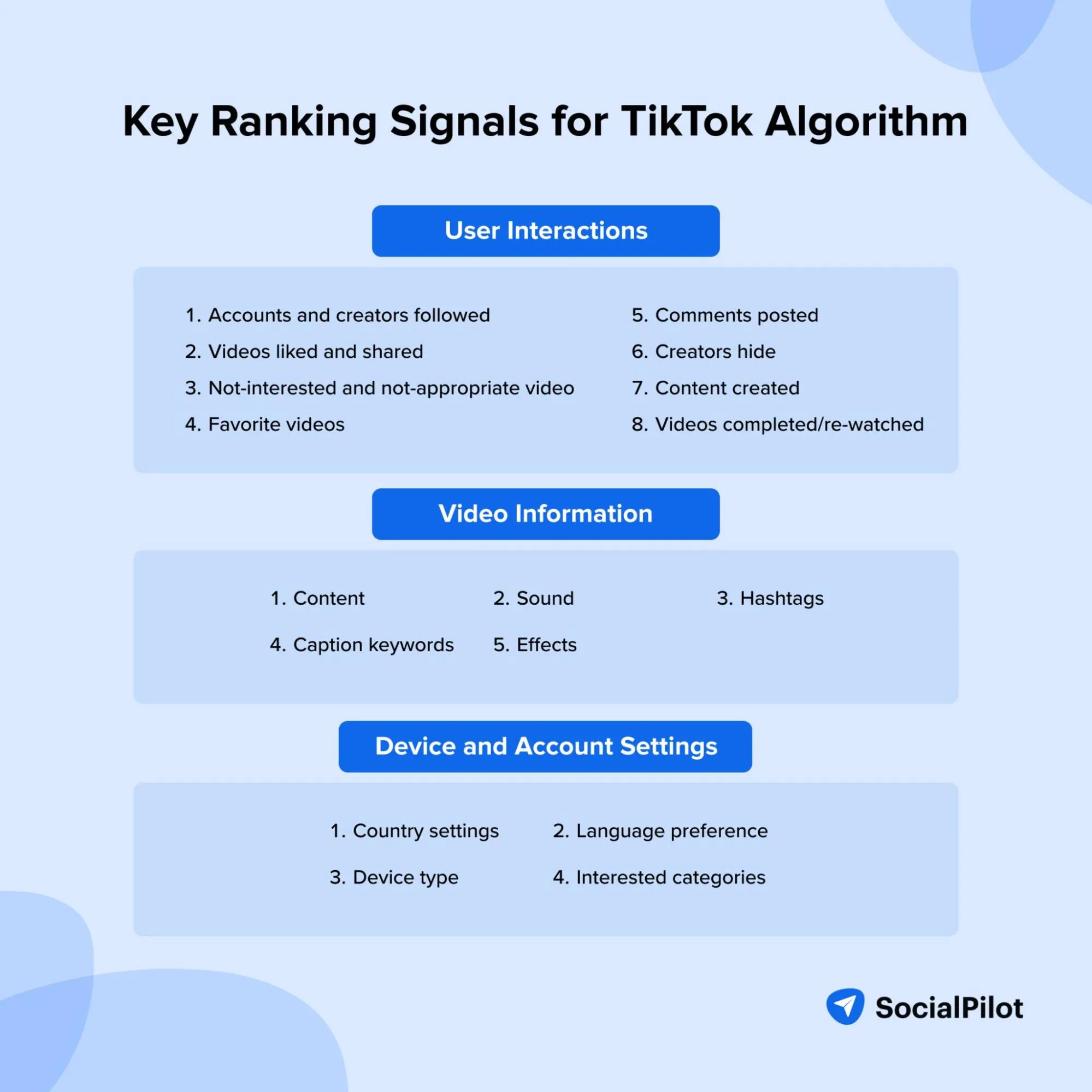
The primary factors influencing the TikTok Algorithm are user interaction, video information, and device and account settings. Each of these signals is responsible for the algorithm’s ability to precisely match content to TikTok users’ preferences on the “For You” page.
Here’s a quick look at all three signals and the factors they depend on:
1. User Interactions
TikTok relies heavily on users’ past interaction signals, such as who they follow, the content they like or share, and the videos they watch fully or skip, as well as the type of content they create, to understand what content they enjoy and want to see more of.
Here’s a full list of interaction signals that TikTok algorithm tracks for a user:
- Accounts and creators they follow
- Videos they like and share
- Videos they mark as not interested in or inappropriate
- Videos they’ve added as favorites
- Comments they have made
- Creators or sounds they’ve hidden
- Content they’ve created
- Videos they watch to the end or rewatch
- Interest expressed through both organic content and ads
For instance, if the user has been interacting positively with the cookie videos, then TikTok will show them more cookie, food, and bakery-related videos.
Here’s an insider tip!
While TikTok hasn’t publicly said so, experts say it uses a point-based system in which some signals carry more weight (like shares or repeat views) than others (like likes).
“It takes all your behavioral signals which is built into your own experience you’re using the app like for example how long you stay on a video how quickly you swipe it do you share it do you comment do you like it, takes those behavioral signals it organizes it mathematically and it matches it with content that matches of your behavior,”
Shou Chew, TikTok CEO says.
2. Video Information
The TikTok algorithm also relies on the video’s content and the location where it was published to understand its relevance to the user. Recommendation systems use metadata to determine whether the videos are similar to what the user searches for or generally engages with.
Here are the factors it looks for:
- Sound and Effects of the video
- Location where it was published
- Hashtags and Caption of the video
- Cover text
- Audio transcripts
3. Device and Account Settings
The TikTok algorithm also relies on the user’s device and account settings. While these signals carry less weight than user interactions and video information, they are still important for localized content to appear in the “Search” and “For You” feeds.
Here are the factors TikTok algorithm considers:
- Country settings
- Language preference
- Location
- Time Zone
- Device type
- The categories they selected as a new user
In their newsroom article, they stated, “A strong indicator of interest, such as whether a user finishes watching a longer video from beginning to end, would receive greater weight than a weak indicator, such as whether the video’s viewer and creator are both in the same country.”
These are the same signals the TikTok algorithm uses to show content to a new user. Whenever a new user joins:
- First, the TikTok app asks the user to choose a set of topics they’re interested in and builds the initial “For You” feed based on those choices.
- Next, it pushes some popular and trending content based on the user’s location and language settings.
- As the user starts spending more time on the platform, TikTok begins tracking their behavior, such as what they watch, skip, like, comment on, or rewatch. Over time, the algorithm relies less on these signals and more on real usage patterns to fine-tune the feed and match the user’s actual interests.
Ranking Signals That Influence Results in TikTok Search and Other Feeds
Unlike the Instagram algorithm, TikTok doesn’t have separate signals for each feed on its platform. It uses the same signals (User interaction, Content information, and User Information settings) to rank content on TikTok search and the Following, Friends, and Live Feed.
Of course, what these signals mean changes based on the page you are on. Here is a complete breakdown of the factors the TikTok algorithm tracks to understand the three primary signals for every TikTok feed.
What the TikTok Algorithm Ignores and Actively Filters Out
Not everything influences the TikTok algorithm, and not everything deserves distribution. TikTok’s algorithm doesn’t prioritize the following count and filters out certain types of content before they ever have a chance to spread.
Factors that Do Not Influence TikTok Algorithm
TikTok does not recommend content based on the number of followers or high-performing past videos. This means that even if you are new to TikTok, you can go viral by creating high-quality videos showcasing good content.
The Algorithm is not affected by account age, posting frequency, or paid promotion. This suggests that to stay relevant and popular on TikTok, you must consistently create engaging content.
Content TikTok Algorithm Never Recommends
Before the TikTok Algorithm actually pushes your content to more viewers, it runs its own quality and authenticity checks. And, if your content falls in any of the below categories, TikTok will not recommend it to the audience:
- Anything against TikTok community guidelines
- Spam content
- Duplicated content
- Already watched content
- Not interested/not appropriate content
- Under review content
- Unsafe and offensive content
- Low-quality, blurry videos.
- Content shared by below 18 users
Signals that impact and do not impact the algorithm explained above can help you create a strong strategy that aligns with your viewers’ expectations and increases your chances of going viral.
Tips to Harness Your TikTok Algorithm for Growth
Now that you know the signals that the TikTok algorithm picks up, it’s time to put that knowledge to use and create more content using it.
Here are some tips to help you get virality on TikTok by charming the algorithm and generating higher reach.
1. Stick to Your Niche
TikTok has changed over the years. The algorithm now supports niche content that helps build communities around broader interests.
Creating niche-specific content gives the algorithm a clearer idea of who you are and who your audience is. And it’s not just the algorithm, audiences love it too. In fact, 76% of TikTok users say they like it when brands are part of interest-based communities on TikTok.
You don’t have to create content that explodes everywhere. You just have to create content that resonates with the right audience.
2. Hook Scrollers Fast
As we discussed, the TikTok algorithm favors watch time. And you can’t expect to get strong watch time if people don’t stop scrolling in the first place.
The first 1 to 3 seconds of your video decide everything. If your opening doesn’t grab attention, your video gets skipped, and the algorithm quickly learns not to push it further.
Start with a strong hook. Show the outcome first, ask a bold question, make a surprising statement, or visually show something that creates curiosity.
3. Create Replay Worthy Videos
When people watch your video more than once, it tells the TikTok algorithm that the content is worth showing to more TikTok users. When you create niche-specific valuable content, viewers are more likely to replay to catch all the details.
There is also one trick to increase your repeat views – looping your videos. Design your videos to loop naturally, where the ending connects back to the beginning. Tutorials, quick tips, and before–and–after transitions work especially well for this.
Zach King’s almost every TikTok video uses the loop effect. Check him out.
4. Master TikTok SEO
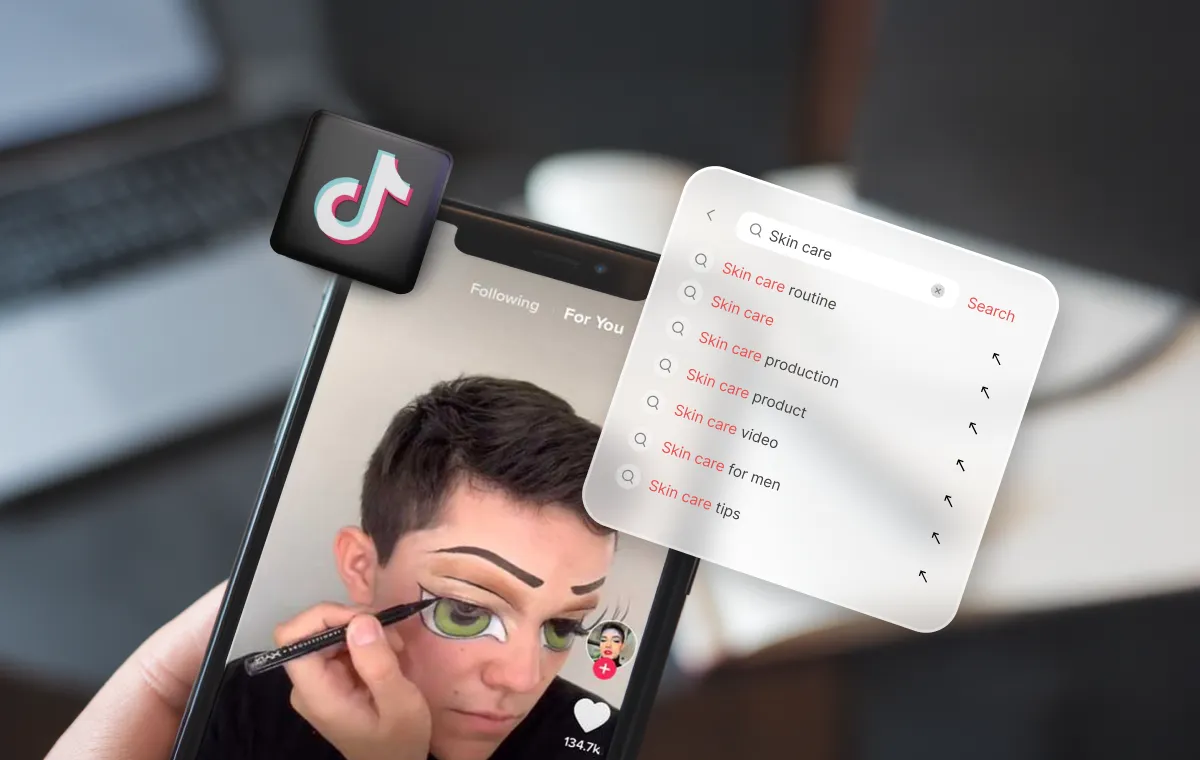
According to a survey, 64% of Gen Z users on TikTok are using the platform for searching for stuff as they do on Google. And just like other search engines, there are certain TikTok SEO factors that the algorithm checks to rank content in “Search.”
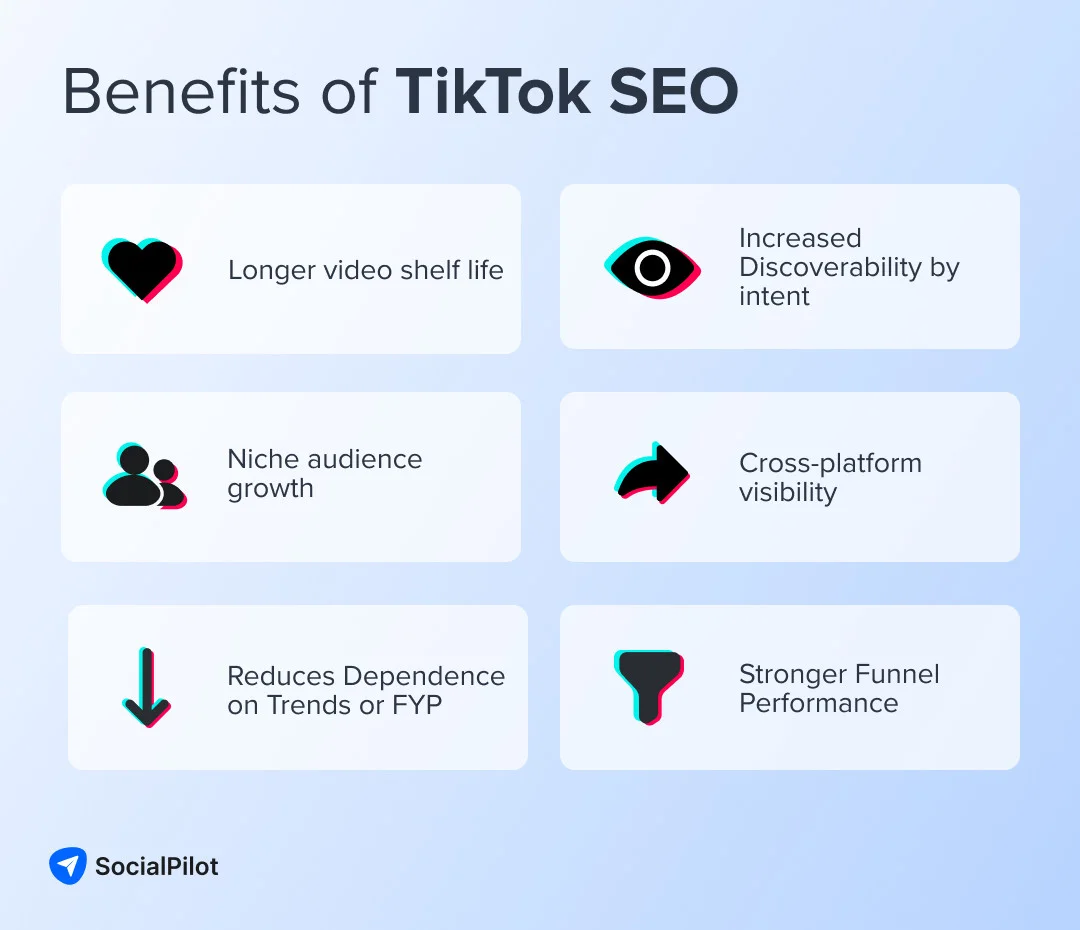
As we have learned, the TikTok search algorithm looks for content information like your captions, on-screen text, hashtags, and even your spoken words to understand what your video is about. If your content is well-optimized around a clear topic, it has a much better chance of appearing when people search for that topic and continuing to get views long after you post it.
5. Be Consistent With Your Posting
It goes without saying that consistency is a big factor in getting your TikTok videos seen. The more you post, the more you tell the algorithm who your content is for.
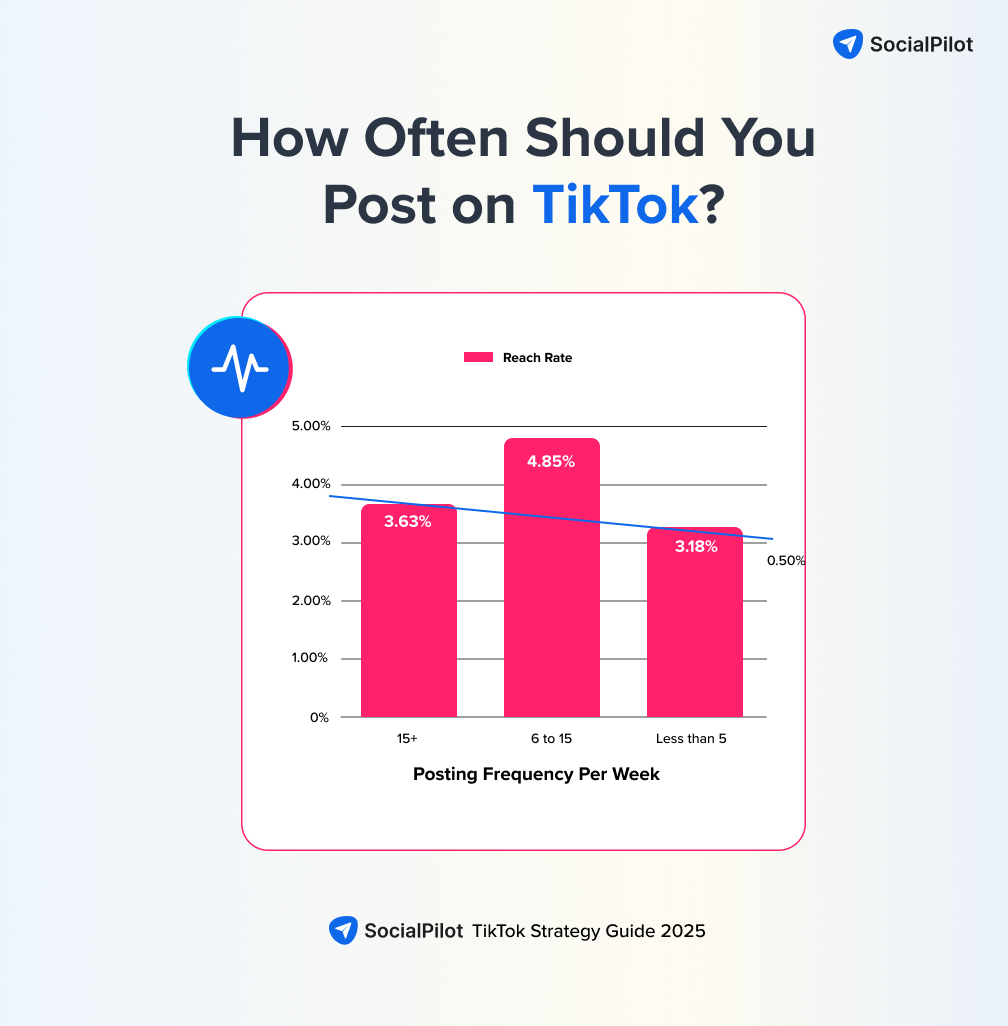
Since user interaction with your content is a big part of the puzzle, you need to post enough to stay top of mind for your target audience and build viewing habits.
You don’t have to post daily (even if you can). Just set a realistic posting frequency you can stick to. Our research on over 1.5 million TikTok posts reveals that posting 2 to 3 times per week works best.
While posting, you must also keep in mind to post when your audience is most active. Posting at the best times on TikTok will give your content the initial engagement the TikTok algorithm looks for.
Staying consistent on TikTok can feel overwhelming. The easiest way to make it manageable is to work in batches, create your content in batches, then schedule it in one go.
While you focus on creating content, let SocialPilot’s TikTok scheduling functionalities handle the scheduling for you. Set up your content once across multiple TikTok channels, stay consistent for weeks, and free up your time to focus on ideas that actually move the needle.

6. Follow the Trends
Trends are the lifeline of TikTok. To keep things rolling, the algorithm also rewards trending content that fits into what people are already watching, engaging with, and searching for.
You don’t have to blindly follow every single TikTok trend. Just keep an eye on TikTok trends and participate in the ones you can adapt to create content for your niche audience.
Trends on TikTok usually show up in four forms:
- Trending sounds and music
- Trending formats or video structures (e.g., “3 mistakes you’re making…”, “POV”, before–and–after, etc.)
- Trending effects and filters
- Trending topics or challenges
In most cases, all of these trend types form around a trending sound. TikTok has noted that videos with background music added get an average of 98.31% more views than videos without background music.
And if that sound itself is trending, your chances of getting recommended become even higher.
Busting the Biggest Myths About TikTok Algorithm Work
TikTok is one of the biggest social channels right now. It has more than 2 billion users worldwide.
That kind of scale makes marketers and creators chase virality and cling to every “hack” they hear to land on the For You Page. But most of this advice is noise. So let’s clear the air and break down some of the biggest myths about the TikTok algorithm.
1. Watching Your Own Videos Boosts Visibility
If you think watching your own video repeatedly on TikTok will make you go viral, you’re wrong! The TikTok Algorithm focuses on unique views and engagement for every video.
2. Removing Low-Performing Videos Improves Reach
If you have a few videos that didn’t get much love, don’t try to delete them. Deleting underperforming videos will not give you the desired visibility.
The TikTok algorithm judges each video individually. Although it does find you an audience based on who liked your previous videos, it will not decrease the reach of your new videos.
3. More Followers Means More Views
Having a wider and bigger following might seem like a final destination for good reach. However, the real impact comes from real engagement (likes, comments, and shares) and the quality of your content.
Having a big follower base can give the initial push for views, but the actual viral factor can be achieved with unique engagement.
The TikTok algorithm has never claimed the duration in which you can expect your video to go viral; this can happen at any time, any day. Even your content shared months ago can catch fire today.
Persistence and consistency are two crucial factors for long-term engagement and visibility. So, keep creating content; you never know when you might gain popularity.
5. #FYP and #ForYou Increase Chances of Getting Featured
Hashtags like #FYP, #ForYouPage, and #ForYou are widely used in TikTok captions, with many believing they increase the chances of getting featured and trending. However, the truth is that the content that people can’t stop watching is what lands on the For You Page. The algorithm is more likely to promote hashtags that resonate with users and are relevant to the content.
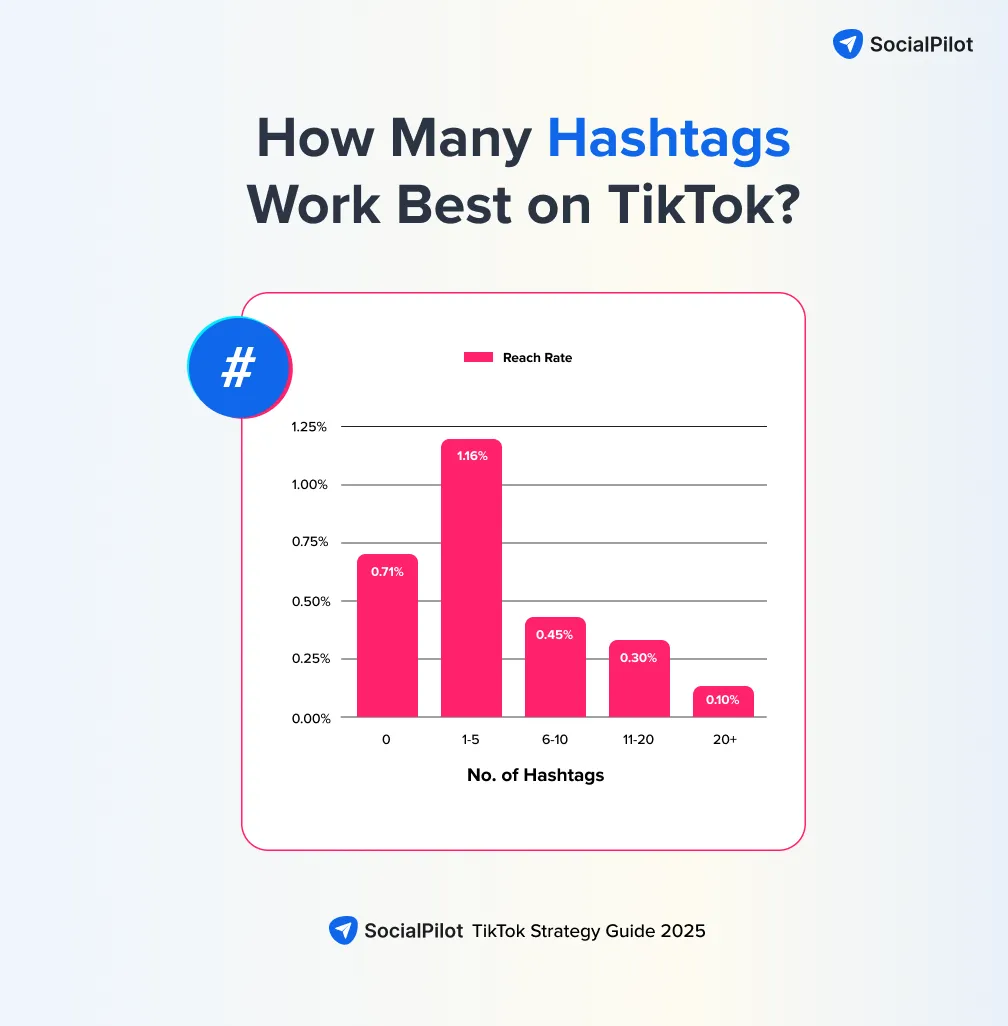
Instead of relying on broad but overused hashtags like #FYP, it’s better to mix both broad and niche hashtags. Our research showed that videos with 1-5 hashtags achieve the highest reach rate of 1.16%. This combination increases the likelihood that your content reaches the target audience and is featured on the For You Page.
6. TikTok Promotes Videos with High-Production Value
Going viral is all about creativity and connecting with your audience. You don’t really need a fancy budget to get featured. Millions of people go viral on TikTok with smartphone-shot videos.
Good production can enhance the video. However, it does not affect the algorithm or its reach that much. Even if you don’t have a high budget, you can create videos that outperform others.
Dominate the TikTok Algorithm in 2026
Success on TikTok in 2026 is less about gaming the algorithm and more about creating content people actually want to watch, share, and revisit. Focus on strong hooks, consistency, and content that delivers value to your audience.
As of September 2026, the one major shift this year is structural: the US For You feed now runs on the Oracle-retrained, US-only algorithm, so US creators should judge reach against recent performance while it settles, not last year’s benchmarks. TikTok confirmed no new ranking change in July, August, or September 2026, though EU regulators moved in July to limit For You recommendations of minors’ accounts.
The algorithm rewards creators who understand what works and post consistently. To stay organized and maintain momentum, explore SocialPilot plans and pricing for smarter scheduling, publishing, and content planning that helps you stay consistent at scale.


 Join 55,000+ social media managers


